Nederland
 België
 Deutschland
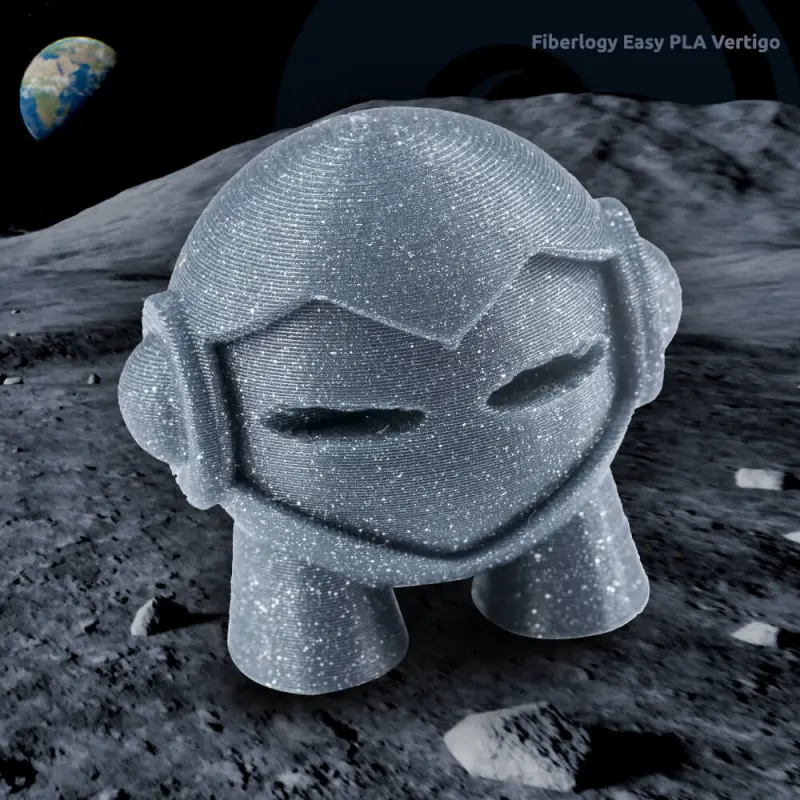
PLA, which stands for PolyLactic Acid, is a biodegradable filament with fantastic printing properties. Once you have set everything correctly, PLA filament allows you to print the most beautiful objects and the most complex shapes. PLA filament is also easy to use and quite forgiving! It is not for nothing that this filament is often the makers' go-to filament. In this blog I want to tell you a bit more about PLA filament and give you 5 handy tips.
First of all it is important to understand the strengths and weaknesses of PLA filament.
The strengths of PLA filament
- Printing PLA filament does not release any nasty or toxic fumes. PLA filament can be used very well in the same room you are in yourself.
- It is a sharply priced filament. Our absolute A-quality Fiberlogy Easy PLA filaments start at just 18.95.
- The melting point of PLA filament is relatively low, which makes it flow nicely and lets you print the most complex shapes in perfect quality.
- PLA filament is excellent for post-processing. Sanding, filling, painting, gluing. It is simple to do and lets you make the most beautiful objects. Fun toy figures or complete cosplay costumes, for example. Nothing is too crazy.
- A heated bed is not required (but is recommended).
The weaker points of PLA filament
PLA also has weaker points. It is not the most suitable filament for every situation.
- PLA is sensitive to high temperatures. So you can imagine that when it can get over 60 degrees in a parked car in summer, you are better off choosing a different type of filament for a phone holder. Fiberlogy ABS, for example.
- PLA is strong, but not the strongest filament available. If you really expect a great deal in terms of impact strength or load-bearing capacity, you may well be better served by Fiberlogy Nylon filament, for instance.
- Furthermore, PLA filament is not suitable for continuous outdoor use. This is of course because the filament is biodegradable and sensitive to sunlight and moisture.
- PLA filament is not suitable for storing or preparing food. If you want a food-safe filament, use Fiberlogy Easy PETG, for example.
To help you with 3D printing PLA filament, we are giving you 5 handy tips for when you get started with this filament. Let’s go...
1. Use the right temperature
When printing with PLA material it is important that the temperature is right. Have a good look at the description to see what the best temperature is. Start with the lower value and then look at the results. The temperature can then be raised in steps of 5 degrees to obtain the right print quality and strength. It really differs per printer when PLA filament comes into its own best. You can also make use of a heated print bed. It could in fact be done without one, but we do recommend it. Here too, check which temperature is most suitable. For Fiberlogy Easy PLA the recommended temperature for the hot end is 200 to 230 degrees. For the print bed, use a temperature between 50 and 70 degrees.
2. Tune your printer and your slicer settings to get the best out of your filament
One of the most common problems with PLA is stringing, in other words oozing during movements of the hot end at the end of a print movement. This creates strings (little hairs). To prevent this you have to optimise the printer and use the right slicer settings. For this, look at the setting for “retraction”. With it you can make sure the filament is pulled back a small distance during a movement, so as to prevent the filament oozing out. The distance to the print bed is also important for proper adhesion. Make sure the bed is correctly adjusted (bed levelling). You can fine-tune your printer in many ways. Perhaps interesting for a later blog article.
3. Store PLA filament in a dry place
PLA filament is sensitive to moisture. So store it in a dry place (preferably dark and cool too). This preserves the quality of the PLA plastics. As a result you will not be faced with surprises such as stringing. Fiberlogy PLA filament is packed airtight and we recommend storing the filament after use in the supplied resealable bag. You can also use a sealable plastic container, for example — throw the supplied desiccants in with it.
4. Choose the right diameter
Take a good look at which filament diameter your printer uses. Different brands of printer use different diameters. In most cases you will see that a diameter of 1.75 mm is used, but it may be that your printer uses a filament with a diameter of 2.85 mm. Many colours of our Fiberlogy Easy PLA filament are available in both diameters. That way you always have the filament you are looking for.
5. Go for quality PLA filament
You see it often on the internet: the most fantastic bargain prices for PLA filament. The kilos come flying at you. But think carefully about this. Often these kinds of (house brand) filaments are mass produced without strict quality requirements and checks. As a result the diameter of the filament can vary considerably, and you will understand that this does not benefit print quality. An A-brand such as Fiberlogy applies a diameter tolerance of 0.02 mm and a roundness tolerance of 0.01 mm. Furthermore the raw materials are of the very highest quality and checks are carried out non-stop during production.
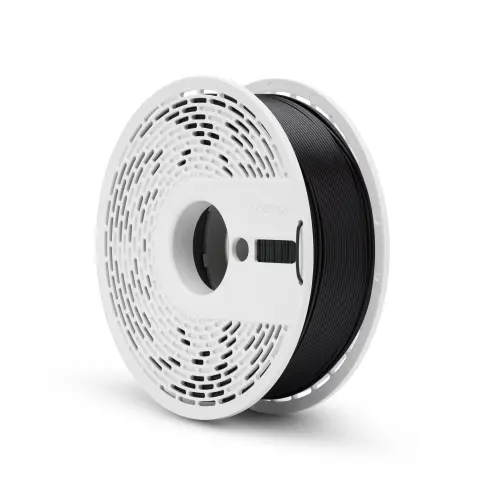
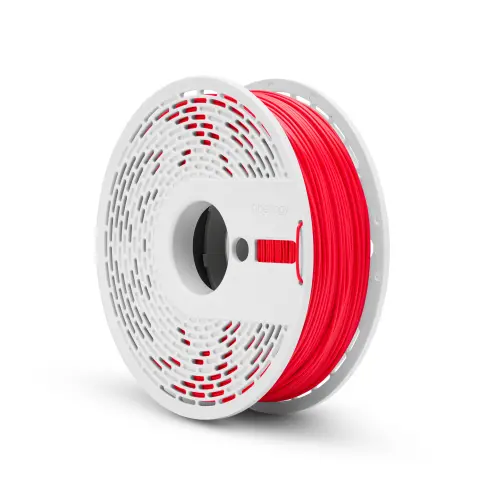
Fiberlogy Easy PLA, high-grade quality
I hope these tips have given you a bit more information about printing with PLA filament. Choose our very high-quality Fiberlogy Easy PLA filament to prevent and rule out many of the better-known problems. When you buy 3 rolls you already enjoy free shipping! If you have more questions about using PLA filament, feel free to get in touch.
Lots of fun and good luck with your 3D printer and using PLA filament!