 Nederland
 België
 France
 Deutschland

What does the fibre do?
Short fibres in the filament make the material stiffer and reduce shrinkage as it cools. A print therefore warps less and stays closer to size. Fibre-reinforced filament also gives a matte, technical surface on which layer lines show less.
ABS-GF or ASA-AF?
| ABS+GF | ASA+AF | |
|---|---|---|
| Fibre | Glass fibre | Aramid fibre |
| Strong in | Stiffness, dimensional stability and resistance to long-term load | Wear resistance, impact resistance and low friction |
| Outdoors | Not UV resistant | UV and weather resistant |
| Nozzle | 270–285 °C | 255–270 °C |
| Print bed | 80–100 °C | 90–110 °C |
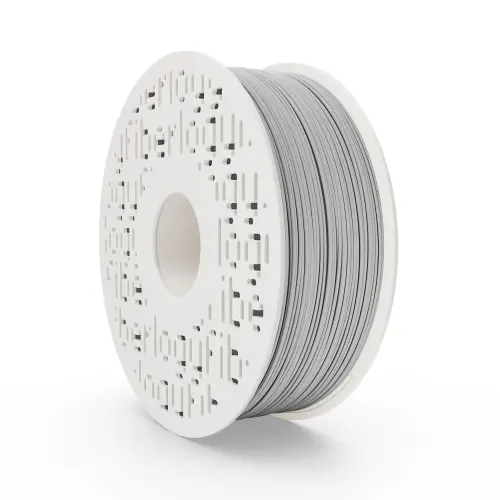
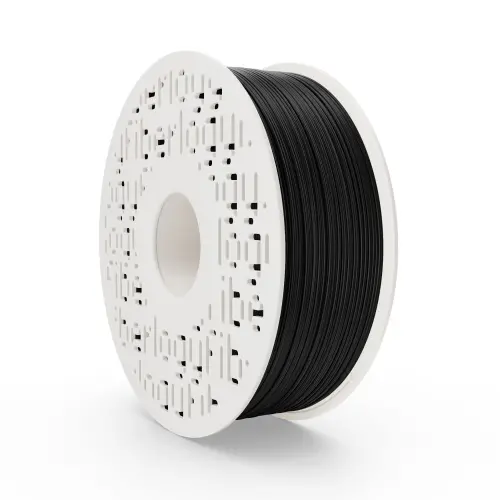
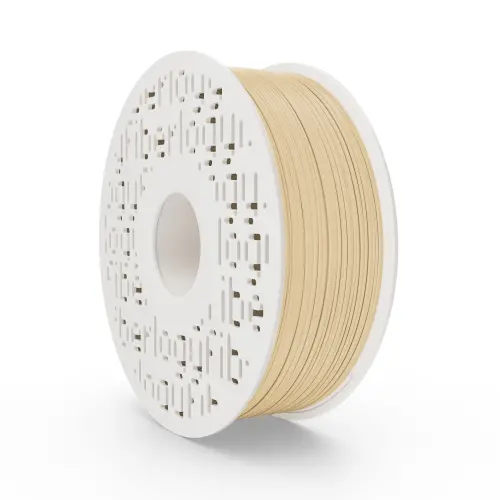
| Colours | Black and grey | Natural |
Without fibre, you will find these materials under ABS and ASA, and the full range under ABS & ASA filament. Looking for a fibre-reinforced filament that is easier to print? Take a look at PCTG + CF / GF.
Printing ABS-GF and ASA-AF
- Nozzle: ABS+GF 270–285 °C, ASA+AF 255–270 °C.
- Print bed: ABS+GF 80–100 °C, ASA+AF 90–110 °C.
- Hardened nozzle: glass fibre wears a brass nozzle quickly. ABS+GF requires a hardened steel or ruby nozzle. Fiberlogy does not require this for ASA+AF, but if you print a lot with it, a hardened nozzle prevents wear.
- Enclosure: recommended for ABS+GF, as for regular ABS. According to Fiberlogy, ASA+AF also prints without a fully enclosed printer.
- Ventilation: both give off fumes while printing. Print in a well-ventilated room.
Something going wrong? Read solving 3D printing problems.
The pros and cons of fibre-reinforced ABS and ASA
Pros
- Stiffer and more dimensionally stable than plain ABS and ASA
- Less warping during printing
- Wear-resistant; ASA+AF also has low friction
- Matte, technical surface
Cons
- Requires a hardened nozzle (ABS+GF)
- Higher printing temperature for ABS+GF
- Gives off fumes, so ventilation is needed
Uses
- Technical structures: stiff, lightweight parts and enclosures.
- Mechanical: gears, sliders and moving parts with ASA+AF.
- Outdoors and car: wear-resistant mounts and clips in ASA+AF.
- Industry: machine parts, jigs and functional prototypes.