 Nederland
 België
 Deutschland
What is special PETG?
This category contains filaments that print like PETG but have a property that ordinary PETG lacks. There are three materials from Fiberlogy: PETG ESD, PETG + PTFE (in black and natural) and CPE HT. For everyday printing, standard PETG is enough. You can see all types side by side under PETG & PCTG filament.
Which one should you choose?
| Filament | Extra property | Suitable for |
|---|---|---|
| PETG ESD | Gradually dissipates static charge | Enclosures for circuit boards, sensors and connectors, holders for measuring equipment |
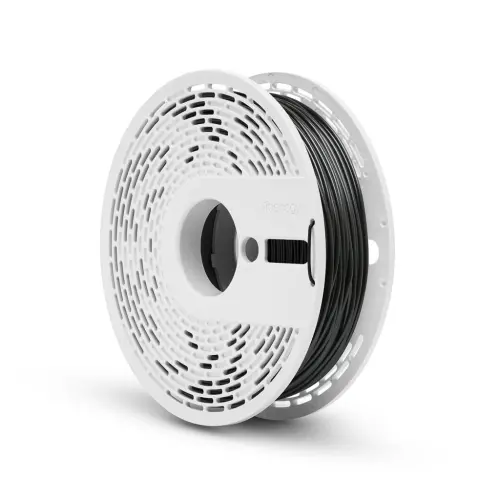
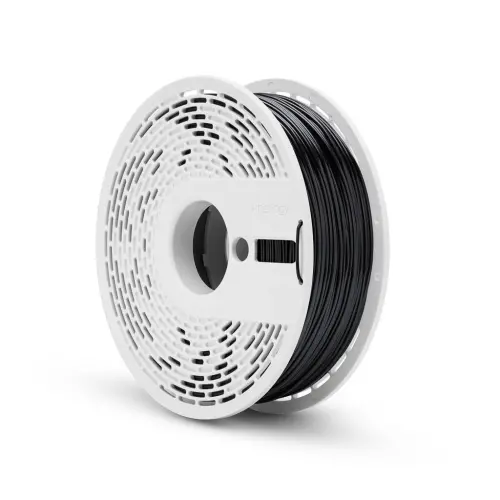
| PETG + PTFE | Low friction and more wear resistance thanks to PTFE (Teflon) | Guides, bushings, sliders and gears |
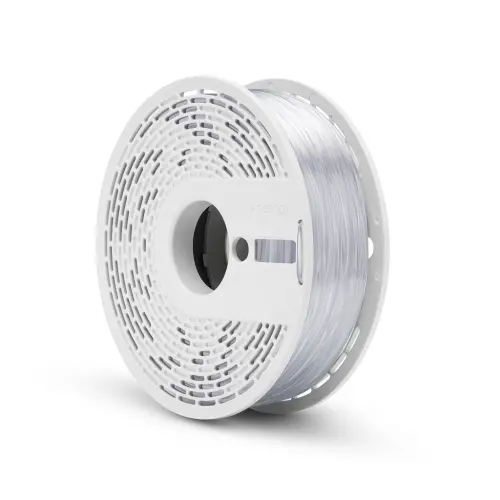
| CPE HT | Keeps its shape up to 110 °C, transparent, odourless and free of BPA, BPS and styrene | Parts that get warm; an easier-to-print alternative to polycarbonate |
PETG ESD: antistatic filament
An electrostatic discharge can damage components on a circuit board. PETG ESD contains nanoparticles that gradually dissipate static charge, so it does not jump across all at once. Because of the particles, the filament is not completely smooth; small thickenings are normal and stay within the diameter tolerance. You will find more antistatic materials, such as ABS ESD, under ESD-safe filament.
PETG + PTFE and CPE HT
PETG + PTFE is PETG with added PTFE, the material known as Teflon. This makes printed parts smooth and more wear-resistant. According to Fiberlogy it withstands 70 °C, just like ordinary PETG. CPE HT is a copolyester from the same family, made from the raw material used for reusable drinking bottles, among other things. It keeps its shape up to 110 °C and comes close to polycarbonate in strength, but is much easier to print.
Print settings
- PETG ESD: nozzle 250–265 °C, print bed 85 °C. Preferably use a 0.6 mm nozzle; if it still clogs, raise the temperature. Note: the temperature on the spool label is incorrect.
- PETG + PTFE: nozzle 220–240 °C, print bed 90 °C.
- CPE HT: nozzle 260–280 °C, print bed 110–120 °C.
- Adhesion: PETG ESD sticks so strongly that it can damage glass or a smooth bed; Fiberlogy recommends masking tape. For the other types, a textured sheet or a layer of glue stick helps.
Print not going the way you want? Solving 3D printing problems covers the most common causes and fixes.
Pros and cons
Pros
- PETG ESD protects sensitive electronics against static discharge
- PETG + PTFE makes smooth, wear-resistant moving parts
- CPE HT keeps its shape up to 110 °C and is transparent
Cons
- Little choice of colour: PETG ESD only in black, CPE HT only transparent
- PETG ESD needs a larger nozzle and sticks very strongly
- CPE HT needs a print bed of 110–120 °C; not every printer reaches that
- Absorbs moisture, so store it dry