 Nederland
 België
 France
 Deutschland

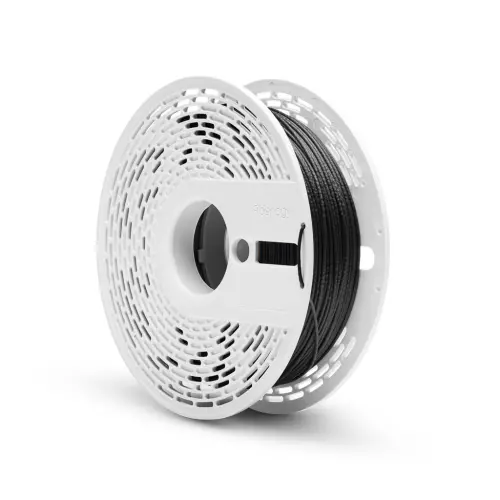
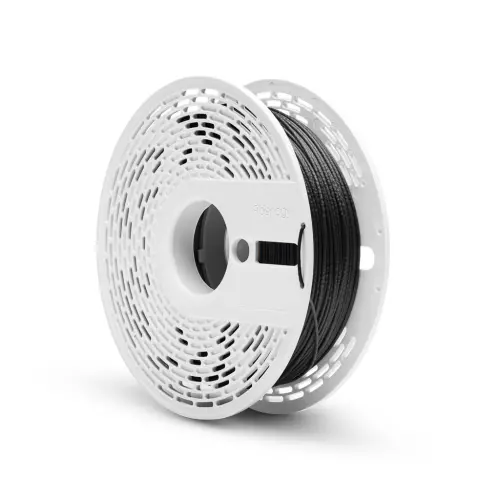
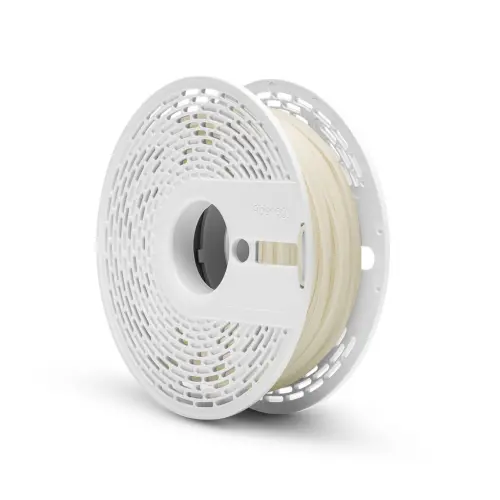
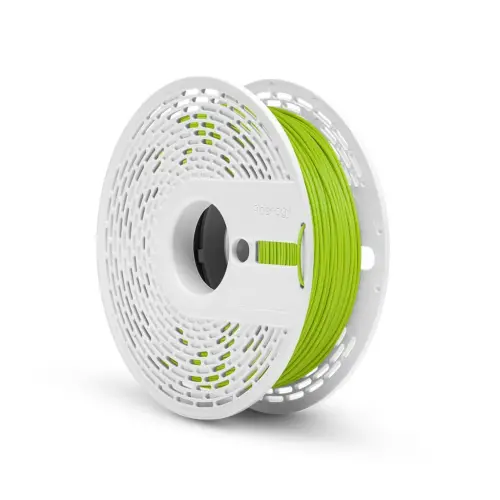
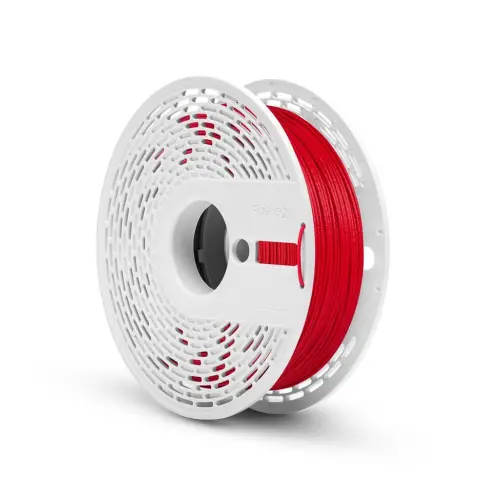
What are PA12-CF and PA12-GF?
Both filaments are based on Fiberlogy Nylon PA12, with 15% short fibres added. The nylon provides toughness and chemical resistance, the fibres stiffness and dimensional stability. According to Fiberlogy, PA12 + CF has twice the tensile strength and more than twice the stiffness of plain PA12, and withstands temperatures up to 160 °C. PA12 + GF is slightly more flexible and copes better with varying loads and shocks.
CF or GF: which should you choose?
| Property | PA12 + CF | PA12 + GF |
|---|---|---|
| Fibre | 15% carbon fibre | 15% glass fibre |
| Character | Very stiff and light | Stiff, but more shock-resistant |
| Appearance | Matte black | Several colours, including natural |
| Suitable for | Drone parts, brackets, replacing metal parts | Parts exposed to vibration or impacts, jigs and fixtures |
Printing PA12-CF and PA12-GF
- Nozzle: 255–270 °C, hardened steel or ruby. The fibres wear out a brass nozzle quickly.
- Print bed: PA12 + CF 100 °C, PA12 + GF 90–110 °C, with a thin layer of glue stick on PEI.
- Enclosure: thanks to its low shrinkage, PA12 + GF can also be printed without an enclosure, according to Fiberlogy.
- Drying: reinforced nylon absorbs moisture too. Dry the spool before printing and store it with silica gel beads.
Something going wrong? Our article on solving common 3D printing problems covers the most common problems and their solutions.
Pros and cons of fibre-reinforced nylon
Advantages
- Much stiffer than plain PA12, yet light
- Less shrinkage, so less warping and more accurate dimensions
- Resists high temperatures and chemicals
- Matte surface on which layer lines hardly show
Disadvantages
- Abrasive: a hardened nozzle is required
- Absorbs moisture, just like plain nylon
- Less ductile than unfilled nylon PA12, which is better suited to clips and hinges
Applications
- Prototypes: car parts, drones and mechanical components.
- Replacing metal: brackets, frames and holders.
- Production: jigs, fixtures and tools.
Reinforced nylon is part of our technical filament. Looking for a fibre-reinforced filament that is easier to print? Take a look at PETG + CF.