 Nederland
 België
 France
 Deutschland

What is wood filament?
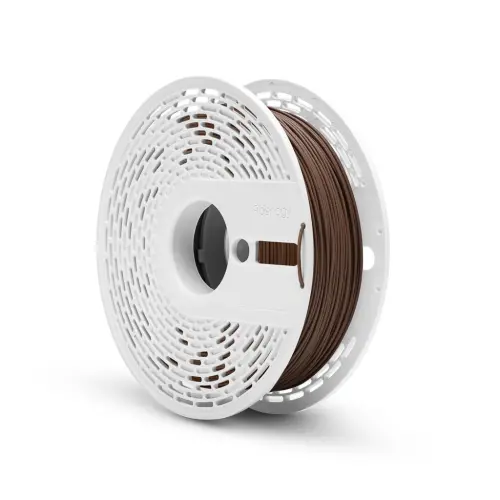
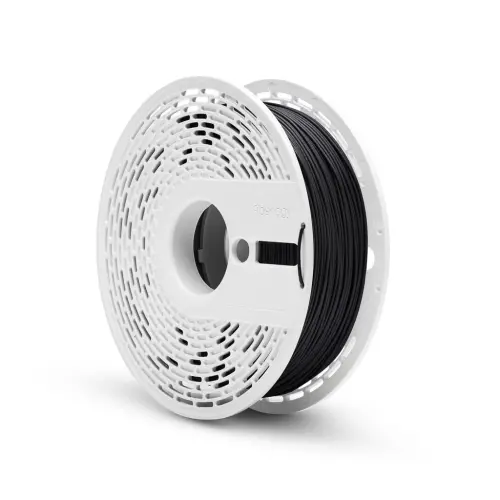
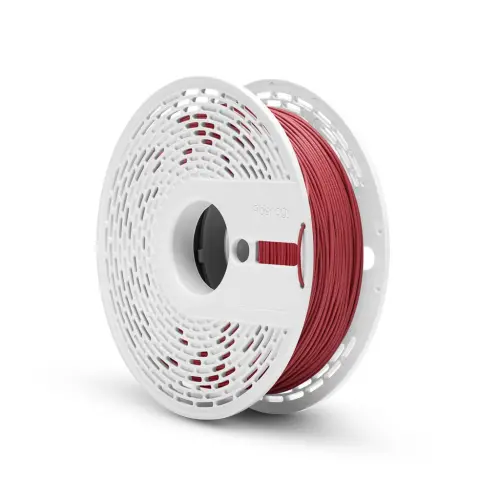
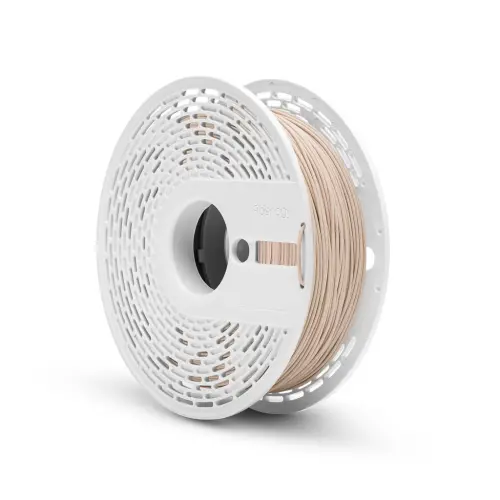
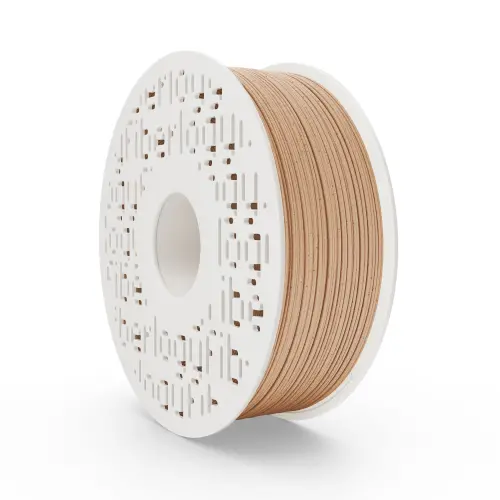
Wood filament is PLA with fine wood fibres added. The plastic makes it easy to print; the wood fibre gives the print the colour, matte texture and smell of real wood. The result feels warmer and more natural than ordinary PLA, and you can finish it like wood: sanding, staining, varnishing or oiling.
3D printing with wood: the right settings
- Nozzle: 190–210 °C. A slightly higher temperature often makes the colour a little darker, a lower one lighter.
- Print bed: 50–70 °C.
- Nozzle diameter: use at least 0.5 mm. The wood fibres can clog a smaller nozzle.
- Speed and cooling: as with PLA, with the fan at or close to 100%.
- After printing: do not leave the filament hot in the nozzle for long. Burnt wood fibre can clog the nozzle; during a pause it is better to lower the temperature.
Something going wrong? Our article on solving 3D printing problems covers the most common problems and how to fix them.
Finishing: sanding, staining and varnishing
You can treat a FiberWood print like a wooden object. Start with coarse sandpaper (grit 120–180) and finish with finer paper (240–400). Then stain, oil or varnish it; stain soaks in best on a sanded surface. You will find more examples and tips in our article on printing wood with FiberWood.
The pros and cons of wood filament at a glance
Pros
- Looks and feels like real wood
- Prints almost as easily as standard PLA
- Can be sanded, stained, varnished and oiled
- Matte texture on which layer lines show less
- Six wood tones, from natural to black
Cons
- More brittle than ordinary PLA, so less suited to parts under load
- Needs a nozzle of at least 0.5 mm
- Less suited to very fine detail
- Like PLA, not resistant to high temperatures
Uses of wood filament
- Home: vases, bowls, coasters, photo frames and lamps.
- Model making: buildings, scale furniture and landscapes.
- Gifts: key rings, name plates, jewellery and boxes.
- Art and decoration: figurines and objects that resemble woodcarving.