 Nederland
 België
 Deutschland
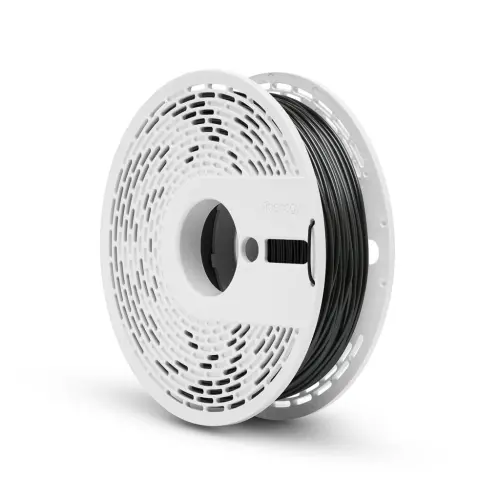
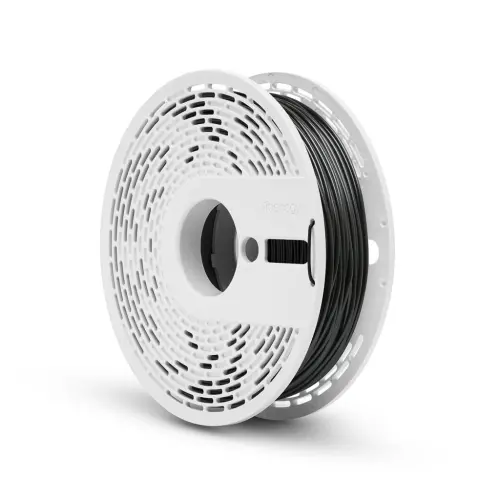
What is ESD-safe filament?
ESD stands for electrostatic discharge: a sudden discharge of static electricity. For people it is at most a small shock, but electronic components can be damaged beyond repair. Fiberlogy ESD filament contains conductive nanoparticles. As a result, charge does not stay on the surface but drains away gradually. The material is antistatic, not conductive: you cannot print current-carrying parts with it.
PETG ESD or ABS ESD?
| Property | PETG ESD | ABS ESD |
|---|---|---|
| Nozzle | 250–265 °C | 250–265 °C |
| Print bed | 85 °C | 90–110 °C |
| Character | Tough, easier to print and warps less | More heat-resistant, easy to post-process |
| Enclosure | Not needed | Recommended |
According to Fiberlogy, both are impact-resistant and resist chemicals and scratches. PETG ESD is the easiest choice for most parts. Choose ABS ESD for parts that get warm. You will also find them under special PETG and ABS.
Printing ESD filament
- Nozzle: Fiberlogy recommends a 0.6 mm nozzle, because the nanoparticles can clump together. If the nozzle clogs, raise the temperature.
- Print bed: ESD filament adheres so strongly that it can damage a smooth bed or glass. Print on masking tape.
- Filament: because of the nanoparticles, the filament is not completely smooth. Small thickenings are normal; the diameter stays within tolerance.
- Checking: for critical applications, measure the surface resistance of the printed part; it also depends on your print settings.
Something going wrong? Our article on solving common 3D printing problems covers the most common problems and their solutions.
Pros and cons of ESD filament
Advantages
- Protects sensitive electronics against static discharge
- Impact-resistant and resistant to chemicals and scratches
- Can be printed on an ordinary FDM printer
Disadvantages
- Only available in black
- A 0.6 mm nozzle gives less fine detail than 0.4 mm
- Adheres so strongly that you print on tape
- Not suitable for conducting current
Applications of ESD-safe filament
- Enclosures: for circuit boards, controllers, sensors, connectors and measuring equipment.
- Storage: trays and bins for components.
- Production: jigs, fixtures and holders for assembly and test set-ups.
ESD-safe filament is part of our technical filament.