Nederland
 België
 Deutschland
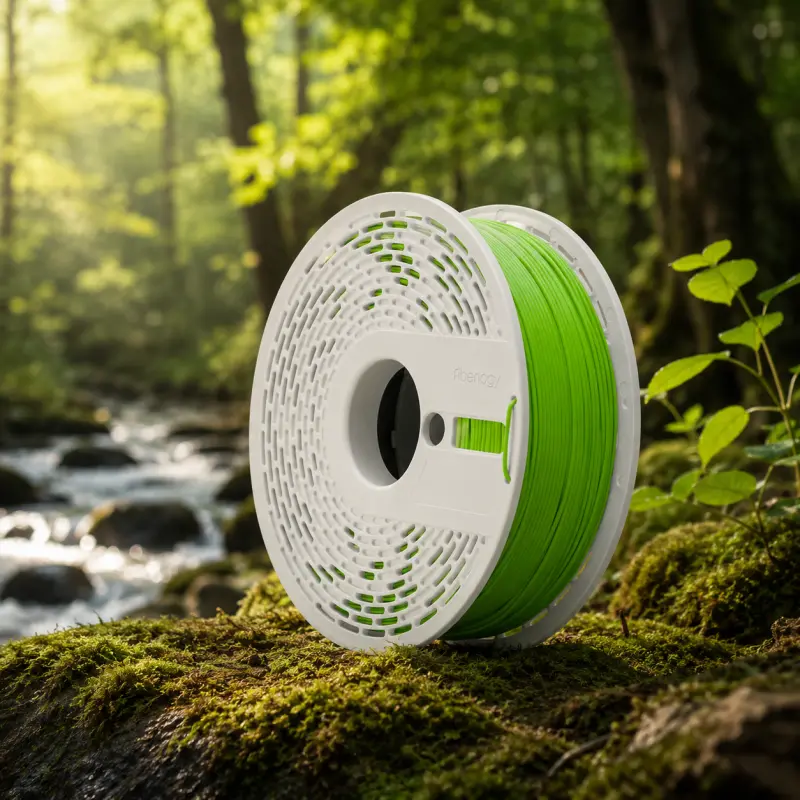
Polypropylene (PP) filament: light, flexible and chemically resistant 3D printing material
Polypropylene (PP) filament has long since stopped being a material for specialists only. More and more makers, engineers and companies are choosing PP when low weight, flexibility and chemical resistance matter.
At 3D Fanshop we notice that demand for technical filaments is growing. That is why we offer, among other things, the high-grade PP filament from Fiberlogy: a material developed for demanding real-world applications.
What is polypropylene?
Polypropylene is one of the most widely used plastics in the world, outside 3D printing too. Think of packaging, car bumpers and household products. It is a semi-crystalline material, which explains why it is so tough and resilient, but also why it demands a bit more attention while printing than PLA, for example. PP has a tendency to shrink while cooling, which can cause warping if the first layer does not adhere properly.
Lightweight and strong
One of the biggest advantages of polypropylene is its low weight. With a density of just 0.9 g/cm³, PP is one of the lightest materials in 3D printing. That makes it ideal for applications where weight has to be saved without giving up sturdiness.
Despite its light character, PP is surprisingly strong and suitable for parts that are mechanically loaded or have to move.
Suitable for:
- bicycle parts
- functional housings
- mechanical parts
Flexible and wear resistant
PP combines flexibility with high tensile strength and excellent fatigue resistance. This makes it particularly suitable for parts that bend often or are under tension.
Think of snap-fit connections or hinged parts that have to keep functioning reliably over a long period, also known as "living hinges".
Suitable for:
- clips
- storage boxes and trays
- hinges
Resistant to chemicals
Polypropylene is known for its excellent chemical resistance. The material stands up well to many acids, bases, oils, fats and solvents.
That makes it a smart choice for applications in workshops, laboratories and industrial environments where parts come into contact with aggressive substances.
Suitable for:
- laboratory trays
- industrial parts
- automotive applications
Safe for wearable applications
PP is an odourless and non-toxic material. That also makes it suitable for applications where prolonged contact with the skin is possible. The material is moreover suitable for contact with food, which makes PP interesting for kitchen-related applications too.
Combined with its flexibility and impact strength, this makes PP interesting for comfort-oriented applications.
Suitable for:
- orthoses
- prosthetic components
- wearable aids
Print settings for PP filament
PP prints pleasantly as soon as you take the shrinkage properties of the material into account. The following guidelines make a good starting point for Fiberlogy PP:
- Nozzle temperature
- 220–250°C
- Bed temperature
- 0–80°C (depending on print surface)
- Enclosed chamber
- Not necessary
- Fan
- Low, to limit warping
- Print surface
- PP tape or a special PP print surface for the best adhesion
Because PP has a low surface tension, common adhesives and even many bed coatings adhere poorly to it. So preferably print on PP tape or a PP-suitable surface, and use wide first layers or a brim to reduce the chance of it coming loose.
A sustainable choice
Besides the technical advantages, PP is also a more sustainable choice. The material is recyclable and, thanks to its long service life, parts need replacing less quickly.
That way you contribute not only to a reliable end product, but also to less waste.
Buying Fiberlogy PP filament?
At 3D Fanshop you will find Fiberlogy PP filament for a wide range of technical applications. Are you looking for a light, strong and chemically resistant material for your next printing project? Then polypropylene is definitely worth considering.