 Nederland
 België
 France
 Deutschland
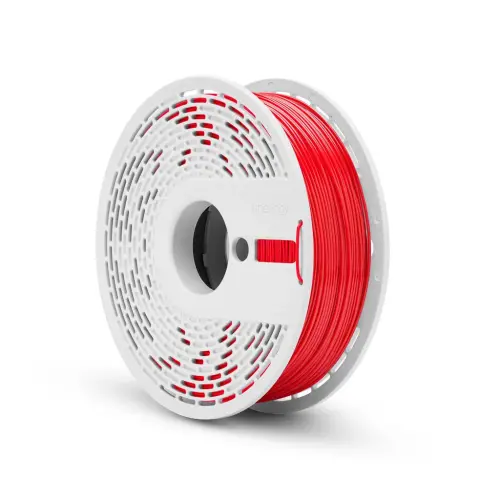


What is technical filament?
PLA and PETG cover most print jobs. Technical filament, also called engineering filament, starts where they stop: with parts that rub against each other, have to stay stiff and dimensionally stable, meet chemicals, or are so complex that the support has to disappear afterwards. These materials ask more of your printer, such as a hotter or hardened nozzle or a second extruder.
Which technical filament should you choose?
| Material | Choose it for | Nozzle | Print bed |
|---|---|---|---|
| Nylon / PA12 | Tough, wear-resistant parts that move: gears, plain bearings, clips | 255–270 °C | approx. 100 °C |
| Nylon + CF / GF | Stiff, dimensionally stable parts: brackets, drone parts, jigs | 255–270 °C | 90–110 °C |
| PP | Light, flexible, chemical-resistant parts: hinges, containers | 220–250 °C | Not required |
| Soluble | Support that you dissolve: BVOH in water, HIPS in D-limonene | BVOH 190–220 °C, HIPS 230–245 °C | BVOH 50–70 °C, HIPS 80–100 °C |
| ESD-safe | Parts around sensitive electronics: housings, trays, holders | 250–265 °C | 85–110 °C |
What does your printer need?
- Hot nozzle: nylon and ESD filament print at up to 265–270 °C.
- Hardened nozzle: carbon and glass fibre wear out a brass nozzle quickly.
- Dry filament: nylon and BVOH absorb moisture quickly. Dry them before printing and store them with silica gel beads.
- Print surface: PP only sticks to tape or a PP adhesive; ESD filament is printed on masking tape.
- Two materials: for soluble support you need two extruders or a multi-material system.
Something going wrong? Our article on solving common 3D printing problems covers the most common problems and their solutions.
Pros and cons of technical filament
Advantages
- Parts for real use: wear-resistant, stiff or chemical-resistant
- Options that PLA does not offer, such as soluble support and antistatic prints
Disadvantages
- Asks more of your printer
- More expensive than PLA and PETG
- More preparation, such as drying or tape
Applications of technical filament
- Machinery and maintenance: gears, bearings, brackets and replacement parts.
- Workshop and lab: jigs, holders and containers that withstand oil and chemicals.
- Electronics: housings and trays for circuit boards and components.
Flexible, rubber-like filament is under TPU / Flex. For outdoor use, take a look at ABS & ASA.