 Nederland
 België
 France
 Deutschland
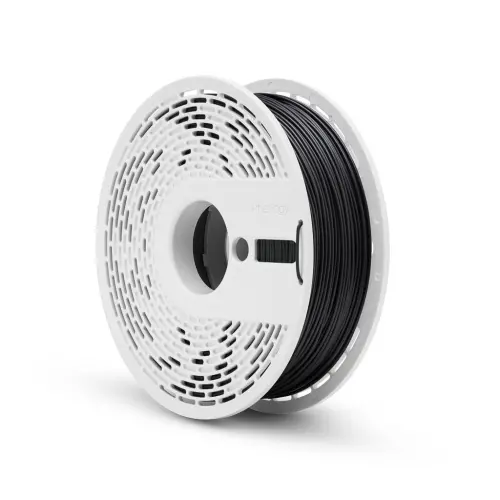
What is PP filament?
Polypropylene (PP) is one of the most widely used plastics in the world, from packaging to car bumpers. It is also one of the lightest materials to print with, with a density of around 0.9 g/cm³. Fiberlogy PP is flexible and tough, has high tensile and impact strength and bonds very well between layers. It is odourless, non-toxic according to Fiberlogy, and recyclable.
Why choose PP?
- Hinges that keep working: PP can bend many times without breaking. This lets you print a hinge that forms one piece with the box and lid.
- Chemical resistance: resists many acids, bases, oils, greases and solvents.
- Light: sturdy parts without much weight.
Printing PP: how to make it stick
PP sticks to almost nothing, including most build plates and glues. That makes it resistant, but also harder to print than PLA or PETG. With the right surface it works well.
- Nozzle: 220–250 °C, for all colours.
- Print bed: according to Fiberlogy, a heated bed is not required.
- Print surface: print on PP tape, such as packing tape, or on a PP-compatible plate. For R PP we recommend Magigoo Pro PP, an adhesive made specifically for PP.
- Cooling: low, to limit warping.
- First layer: print it wide and use a brim so the edges do not lift.
More background is in Fiberlogy PP filament: light, strong and flexible. Something going wrong? Solving common 3D printing problems covers the most common problems and their solutions.
Pros and cons of PP filament
Advantages
- Springs back instead of breaking
- Resists many chemicals
- One of the lightest filaments
- Odourless while printing
Disadvantages
- Adheres poorly to ordinary build plates; you need tape or a PP adhesive
- Shrinks as it cools and can therefore warp
- Printed parts are hard to glue
- Less stiff than PLA or PETG; for stiff, wear-resistant parts choose nylon PA12
Applications of PP filament
- Everyday use: boxes with a closure, hangers, handles and watch straps.
- Lab and workshop: drip trays, lab containers and parts that come into contact with oil or cleaning agents.
- Model making and toys: bumpers, wings and drone parts.
- Wearable aids: with the three skin tones you can print parts for orthoses, for example.
PP is part of our technical filament.