 Nederland
 België
 Deutschland
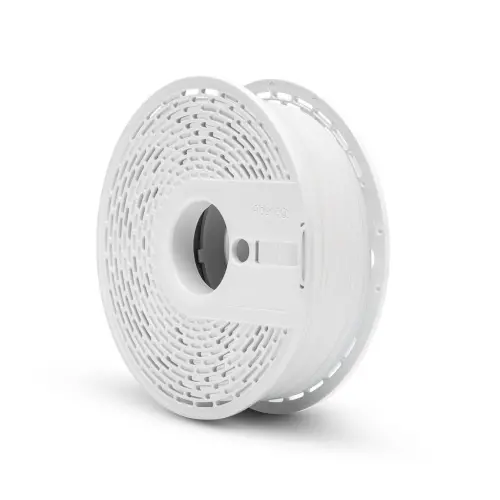
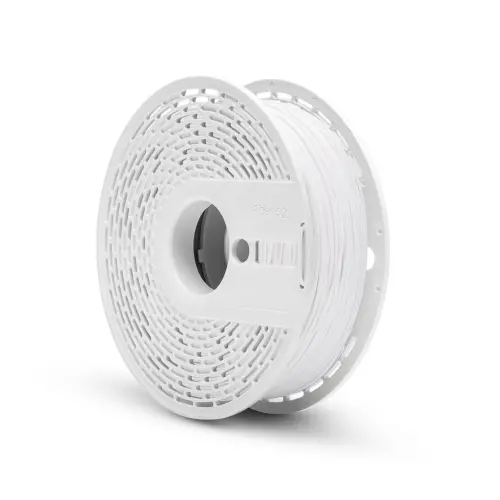
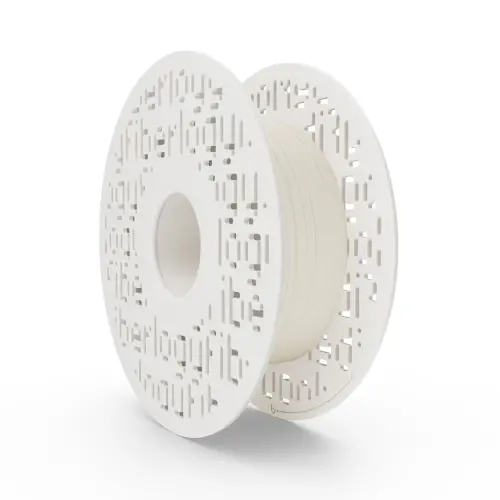
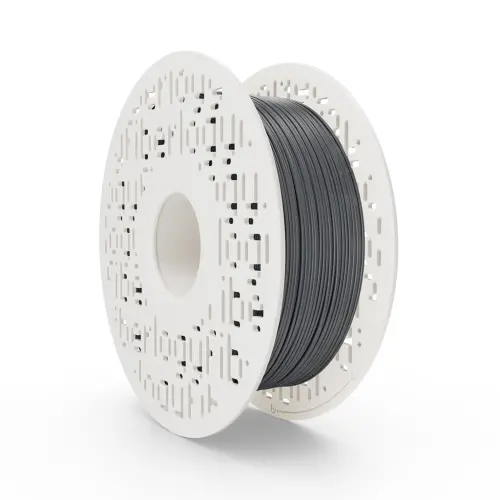
What is soluble filament?
You print ordinary supports in the same material as your model and break them off afterwards. That leaves marks, and in cavities or between moving parts you cannot reach them. With soluble filament you print the model in your normal material and the supports in a second material that you dissolve afterwards. This requires a printer with two extruders or a multi-material system.
BVOH or HIPS?
| Property | BVOH | HIPS |
|---|---|---|
| Dissolves in | Warm water | D-limonene |
| Combine with | According to Fiberlogy, PLA, PETG, ABS, ASA, nylon and flexible filament, among others | Mainly ABS and ASA |
| Nozzle | 190–220 °C | 230–245 °C |
| Print bed | 50–70 °C | 80–100 °C |
BVOH is the easiest choice: it adheres well to many materials and you dissolve it in plain water. Like ABS and ASA, HIPS needs a warm bed and an enclosure, which makes it their standard support partner. You can also use HIPS on its own as a light, matte model material that you can polish, glue and paint with acrylic paint.
Printing and dissolving
- Dissolving BVOH: place the print in warm water. Change the water now and then and move the print around to speed things up.
- Dissolving HIPS: immerse the print in D-limonene, a solvent made from citrus peel. Work in a ventilated room and wear gloves.
- Moisture: BVOH is very sensitive to moisture. Store it sealed with silica gel beads.
- Enclosure: for HIPS, Fiberlogy recommends a printer with an enclosure.
- Tip: print only the support interface layer in soluble material and the rest in your normal filament. That saves material and time.
Something going wrong? Our article on solving common 3D printing problems covers the most common problems and their solutions.
Pros and cons of soluble filament
Advantages
- Clean surfaces without support marks
- Supports in places you could not otherwise reach
- Print moving mechanisms in one go
- HIPS can also be used on its own as a model material
Disadvantages
- You need a printer that can print two materials
- Switching materials costs extra time and filament
- BVOH has to be stored carefully and kept dry
Applications
- Prototypes: models with cavities and large overhangs.
- Mechanisms: hinges and moving parts printed in one go.
- Decoration: ornaments and vases with lots of detail.
- HIPS as model material: cosplay, architectural models and figures.
Soluble filament is part of our technical filament.